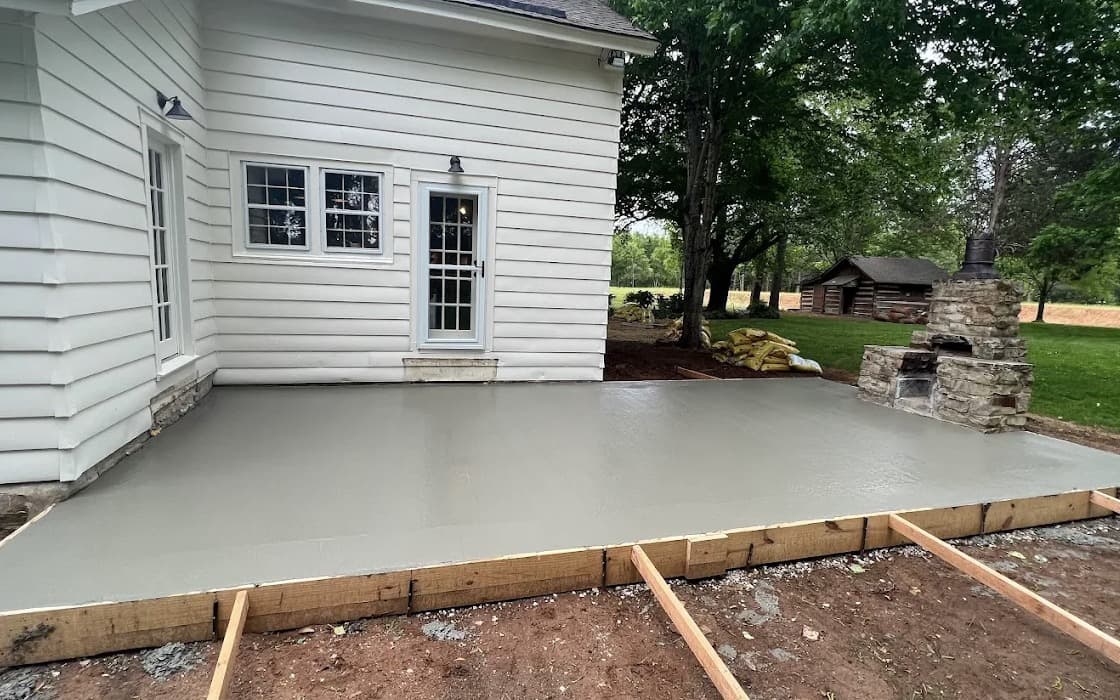
A properly installed concrete driveway is one of the longest-lasting improvements you can make to an Alabama home — but “how long” depends heavily on factors specific to this region. Birmingham's combination of expansive red clay soil, heavy spring rainfall, hot humid summers, and occasional winter freezes puts real stress on a driveway that a mild, dry climate never would. Here's what actually determines how many years you get out of yours.
The short answer: 25–40 years, if it's built right
A concrete driveway installed with proper thickness, reinforcement, base preparation, and jointing typically lasts 25 to 40 years in the Birmingham area before it needs replacement — and often longer with routine sealing. That's a wide range, and where your driveway lands in it comes down almost entirely to how it was built, not luck.
Why Alabama clay soil shortens the life of a bad driveway
Jefferson County sits on expansive red clay that swells significantly when it absorbs water during Birmingham's wet spring months and shrinks again during drier summer stretches. That constant expansion and contraction moves everything sitting on top of it, including a concrete slab. A driveway poured without adequate reinforcement, a properly compacted base, and correctly spaced control joints will crack and heave far faster than one built to account for this soil movement — sometimes within just a few years.
This is also why driveway installation in Birmingham looks different than it does in regions with more stable soil. We build in extra reinforcement and pay close attention to base compaction specifically because of what the clay underneath is going to do to the slab over the following decades.
The factors that determine your driveway's real lifespan
1. Base preparation
A driveway is only as stable as what's underneath it. A properly excavated and compacted gravel base gives the slab a stable platform that resists settling. Skipping this step — or rushing it — is the single most common reason a driveway fails early in Birmingham's soil conditions.
2. Thickness and reinforcement
A standard residential driveway should be poured at a minimum of 4 inches, with 5 inches or more for anyone regularly parking trucks or trailers. Steel rebar or wire mesh reinforcement gives the slab tensile strength to resist cracking as the clay soil beneath it shifts through wet and dry seasons.
3. Control joints
Concrete cracks — that's not avoidable over enough time. Control joints are cut into the slab at planned intervals so that when cracking does happen, it happens along a hidden, straight line instead of a random crack across the visible surface. Properly spaced joints (typically every 8–10 feet for a 4-inch slab) are what keep a 30-year-old driveway looking clean instead of spiderwebbed.
4. Drainage
Water pooling on or beside a driveway accelerates soil movement underneath it and can undermine the base over time. A driveway poured with the correct slight cross-slope sheds water away instead of letting it collect and saturate the clay right where the slab needs stability most.
5. Sealing and maintenance
A quality penetrating sealer protects the concrete surface from moisture intrusion, UV breakdown, and the freeze-thaw cycles Birmingham does experience most winters. Resealing every few years is a small, inexpensive step that meaningfully extends the driveway's functional life and keeps the surface from pitting or flaking.
Signs your driveway is nearing the end of its life
A few hairline cracks are cosmetic and normal — they don't mean your driveway is failing. Watch instead for wider cracks (a quarter inch or more), sections that have visibly heaved or sunk relative to each other, large areas of surface spalling or flaking, and cracks that keep growing year over year rather than staying stable. Those are signs the underlying base or reinforcement has failed, not just surface wear, and it's worth a professional assessment before it gets worse. Our concrete repair and maintenance team can tell you honestly whether a driveway showing these signs is a repair candidate or genuinely due for replacement.
Getting the most life out of a new driveway
If you're planning a new pour or a full replacement, the conversation with your contractor should cover thickness, reinforcement, base prep, and jointing before it ever gets to finish options. Those structural decisions are what determine whether you're looking at a driveway that needs attention in 8 years or one that holds up for 35. You can see our full approach on our driveways service page.
Ready to talk through a new driveway or get an honest read on your current one? Request a free Birmingham estimateand we'll take it from there.