If you're planning a new patio in Birmingham, the material decision usually comes down to two options: stamped concrete or pavers. Both can deliver the look of natural stone, brick, or slate. But they perform very differently once you factor in Alabama's clay soil, humid summers, and heavy spring rain — and the difference matters more here than in a lot of other markets.
The short version
Stamped concrete is generally the lower-maintenance, lower-cost option for most Birmingham homeowners, with a seamless surface that resists weeds and doesn't shift with the clay soil beneath it. Pavers offer easier individual repair and a slightly more authentic stone texture, but require more upkeep and are more vulnerable to Birmingham's soil movement over time. Here's the full breakdown.
Cost
Stamped concrete is typically less expensive than pavers for a comparable square footage and pattern complexity, largely because installation is faster — a stamped concrete patio is poured and finished in a matter of days, while a paver installation involves excavating, laying a sand and gravel base, and setting each paver individually. Pavers can close some of that gap in perceived value because damaged sections are replaceable without redoing the whole surface, but the upfront cost is almost always higher.
How each handles Birmingham's clay soil
This is where the comparison gets specific to our area. Jefferson County's expansive red clay swells and shrinks significantly with seasonal moisture changes. Pavers sit on a compacted sand and gravel base with sand-filled joints between each unit — and that joint sand is exactly what clay soil movement disrupts over time, leading to pavers that shift, settle unevenly, or develop gaps as the ground beneath them moves.
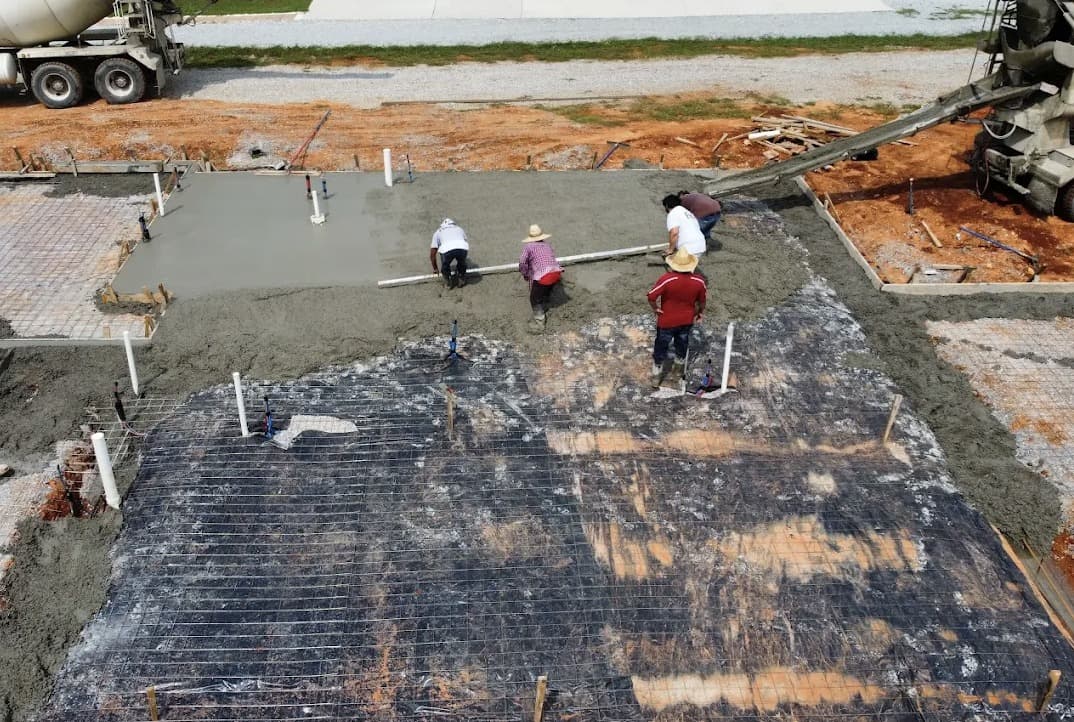
A properly reinforced stamped concrete slab, by contrast, moves as a single connected unit. With the right base prep and reinforcement, it resists the differential settling that's common with pavers on our soil. That doesn't mean concrete never cracks — it can, if installed without adequate reinforcement or control joints — but a well-built slab is generally more stable over the long term on Birmingham's clay than an unbonded paver surface.
Maintenance
Stamped concrete needs periodic resealing — every 2 to 3 years — to maintain its color and protect the surface from UV and moisture. Beyond that, maintenance is minimal: rinse it off, reseal on schedule, done.
Pavers require more ongoing attention: joint sand needs periodic replenishing, weeds can establish in the joints without regular maintenance, and individual pavers can shift or sink and need releveling. Some homeowners prefer this trade-off because it means a damaged section can be popped out and replaced without redoing the whole patio — but it does mean more regular upkeep over the years.
Weed and pest resistance
Birmingham's humid climate is friendly to weed growth, and paver joints — even sand-filled ones — give weeds and ants a place to establish. A stamped concrete surface is seamless, with no joints for either to take hold in, which is a real advantage in our climate.
Look and feel
Pavers have a genuine three-dimensional texture and slight color variation piece to piece that some homeowners feel reads as more authentic than a stamped pattern. Modern stamped concrete has closed much of that gap with realistic textures, deep grout-line detailing, and multi-tone color techniques, but it is technically a printed pattern on a continuous slab rather than individual units. For most homeowners viewing the finished product day to day, the visual difference is subtle — but it's worth seeing samples of both in person before deciding.
Longevity
Both materials can last decades with proper installation and maintenance. Stamped concrete's main vulnerability is cracking if it wasn't reinforced or jointed correctly for our soil. Pavers' main vulnerability is settling and shifting as the base beneath them moves. In practice, we see fewer callbacks on well-built stamped concrete in the Birmingham area specifically because it isn't dependent on individual joint sand staying put through years of clay soil movement.
Which should you choose?
If low maintenance, lower cost, and long-term stability against Birmingham's clay soil are your priorities, stamped concrete is typically the better fit. If you want the flexibility of replacing individual damaged pieces and don't mind more regular upkeep, pavers are a reasonable choice too. Either way, the quality of installation matters more than the material itself — a poorly built version of either option will disappoint you within a few years.
Want to see stamped pattern and color samples for your Birmingham patio project? Visit our stamped concrete page or request a free estimateand we'll walk through the options in person.